Brake pads and brake discs wear out at different rates and fail in different ways, but they get lumped together so often that most drivers assume any brake noise means the same fix. Knowing the difference can save you paying for a disc replacement when pads would have solved it — or, worse, driving on discs that genuinely need attention.
What each part actually does
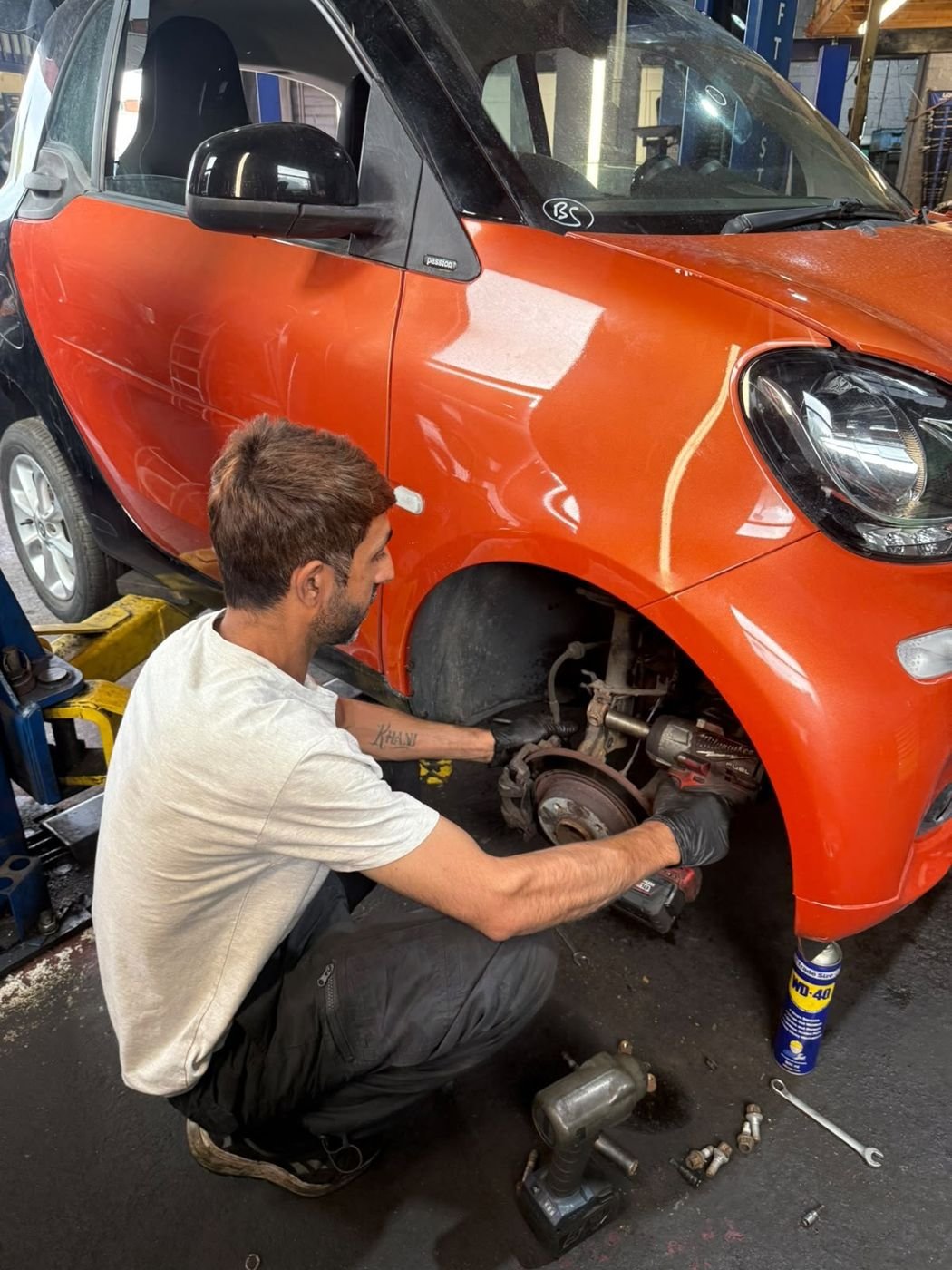
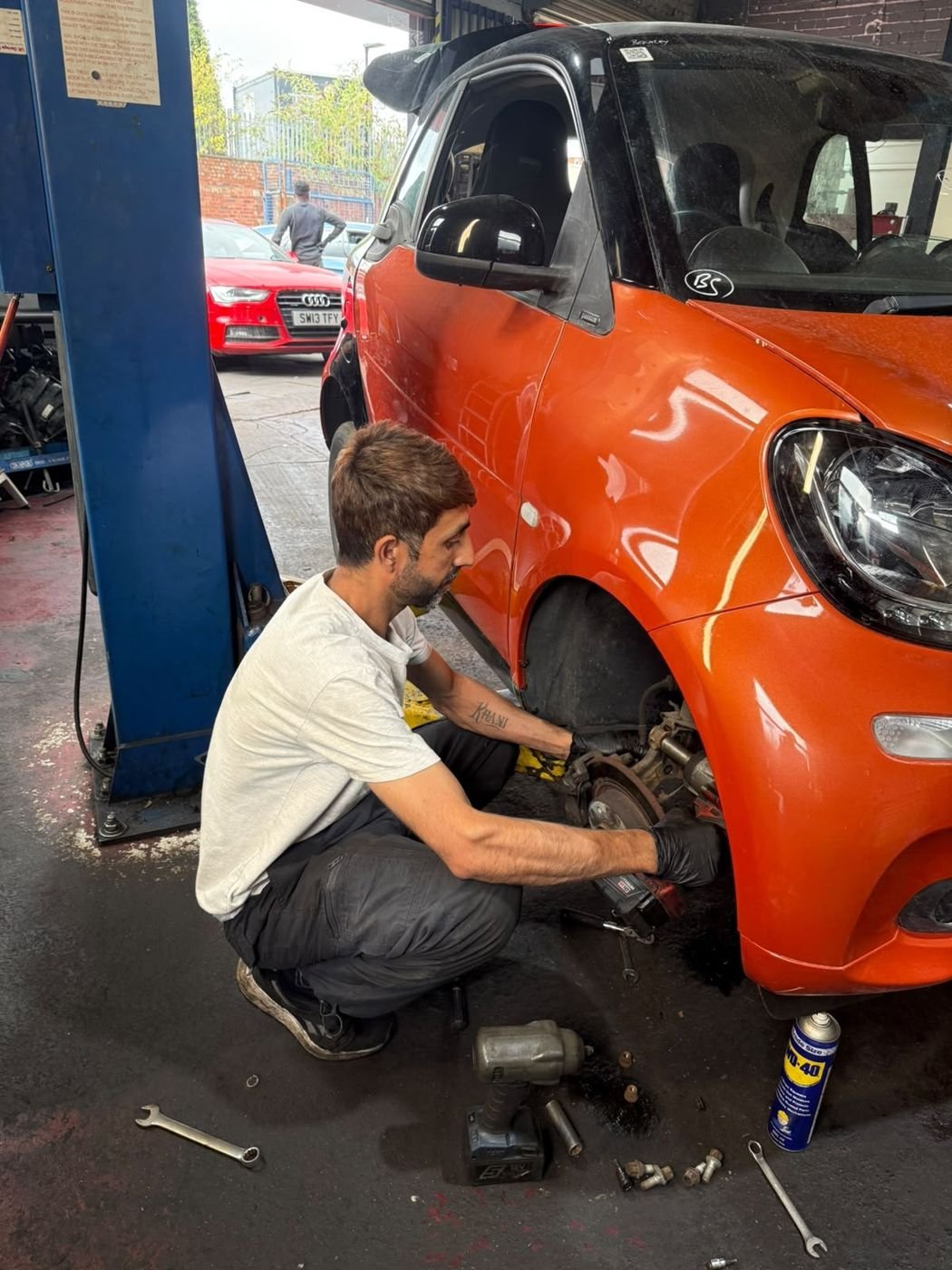
The brake disc is the metal rotor attached to the wheel hub. The brake pad is the friction material that clamps onto the disc via the calliper when you press the brake pedal. Pads wear down through friction every time you brake; discs wear more slowly but can be damaged by heat, corrosion, or worn-out pads grinding directly against the metal.
Signs it's the pads
- A high-pitched squeal when braking, especially at low speed — often the built-in wear indicator doing exactly what it's designed to do.
- Reduced braking bite, needing to press the pedal further than usual.
- The car still stops in a straight line without vibration.
Signs it's the discs
- A pulsing or vibrating sensation through the brake pedal or steering wheel when braking, especially at higher speed — usually a warped or unevenly worn disc.
- Visible scoring or grooves on the disc surface.
- A grinding metallic noise, which often means the pads have worn down completely and are now damaging the disc underneath — at this point it's rarely a pads-only fix any more.
Why ignoring the squeal gets expensive
Pads are a relatively inexpensive, routine wear item. Discs cost significantly more. The most common way a simple pad job turns into a pad-and-disc job is delay — driving for weeks on a squeal that turns into a grind, which by then has scored the disc surface and made pad-only replacement pointless.
What a proper brake check should cover
A complete brake service checks pads, discs, callipers (which can seize and cause uneven wear), and brake fluid condition — fluid degrades over time and absorbs moisture, which affects braking performance even if pads and discs are fine. If a mechanic only looks at the pads without checking the rest, the underlying cause of premature wear can go unnoticed and the same problem comes back within months.